
The Eames chair is frequently viewed as a self-contained design piece, yet its effectiveness hinges entirely on its surroundings.
Creating intimacy through symmetry
Two Eames lounge chairs positioned directly across from one another at a low round table form an intimate conversation area without requiring a sofa. This layout achieves balance through symmetry, while a thick white shag rug softens the chair’s leather and metal frames, preventing the arrangement from appearing rigid or overly formal. Placing this setup near a fireplace or expansive window integrates the view into the experience. Designers seeking similar configurations can draw from contemporary living room layouts that employ comparable pairings.
Designing a focused reading retreat
A dark-walled area featuring a bookshelf, vinyl records, and a black leather Eames lounge chair—with the ottoman drawn forward—serves one clear purpose: supporting concentration. The vintage green side table and Persian rug introduce visual contrast, preventing the space from feeling monotonous. This configuration thrives in underutilized corners or compact rooms where the chair’s bold presence serves as the sole focal point. The principle here involves balancing the chair’s starkness with intentional textures and colors rather than arbitrary selections.
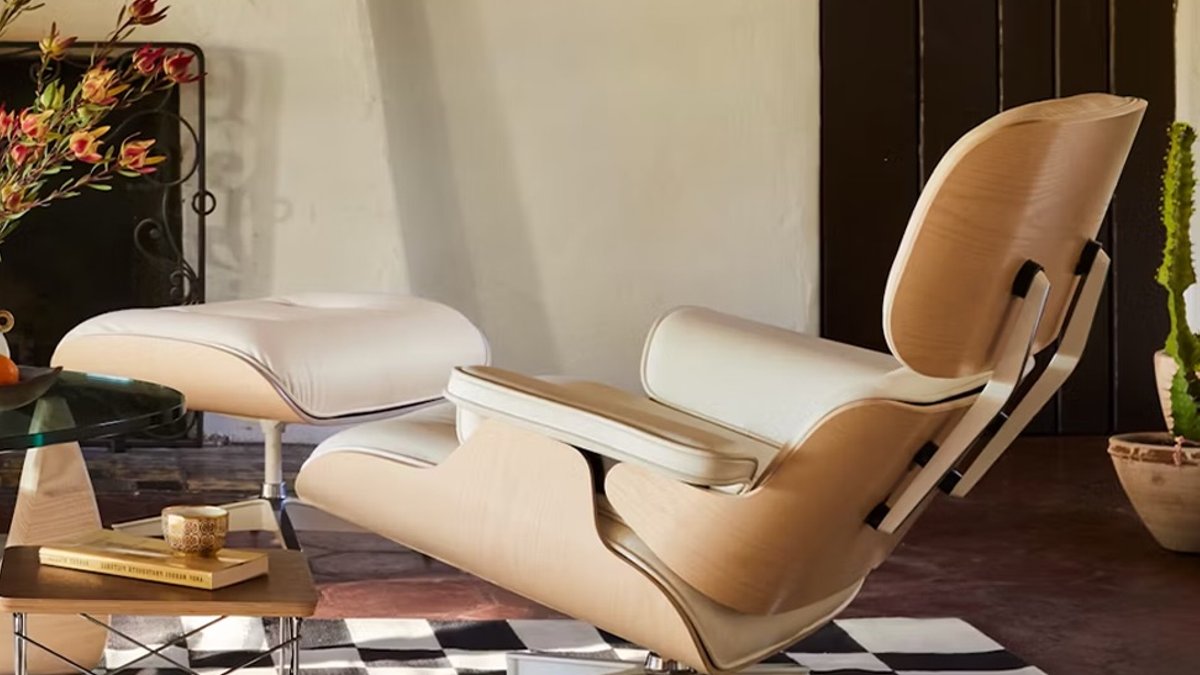
The most widely recognized Eames configuration, dark walnut frames with black leather, is not the only viable option. A white oak frame paired with cream leather produces a lighter, more open atmosphere, particularly when set against warm plaster walls and terracotta flooring. A geometric checkered rug grounds the space, preventing it from appearing too soft or disconnected. The chair’s organic curves harmonize with the pattern, making it a natural fit in modern living areas with lighter color schemes.
Harmonizing the chair with surrounding elements
Warm wood flooring, a brick fireplace, and a collection of coffee-table books create an ideal backdrop for a cream leather Eames lounge chair. The tonal consistency between the chair, flooring, and surrounding furnishings makes this arrangement one of the simplest to execute. A small Eames bird sculpture on the shelf adds subtle detail, though the room remains functional without it. The core idea is that the chair’s warmth should align with the room’s existing color palette.
Positioning an Eames lounge chair in the corner where two windows converge instantly creates a reading nook without additional construction. Dark green leather complements nearby greenery, making the chair feel integrated rather than intrusive. A minimal white side table with decorative vases prevents the corner from appearing incomplete.
Blending mid-century modern with Japanese minimalism
Dark walnut Eames chairs with black leather integrate effortlessly into a space featuring shoji screens, warm wood paneling, and a paper lantern pendant. Both design movements share an appreciation for smooth curves and natural materials, creating a cohesive bridge between mid-century modern and Japanese aesthetics. A low wood credenza placed behind the chair establishes proportion and tone, ensuring the piece does not dominate the room. This approach suits those pursuing a refined, understated living space with subtle character.
A rust-colored mohair Eames lounge chair in a Parisian apartment with marble fireplaces and parquet floors challenges conventional expectations. The warm orange upholstery mirrors the honey tones in the woodwork and the veining in the marble, unifying older and newer elements. The chair acts as a visual connector, harmonizing components that might otherwise clash.


