
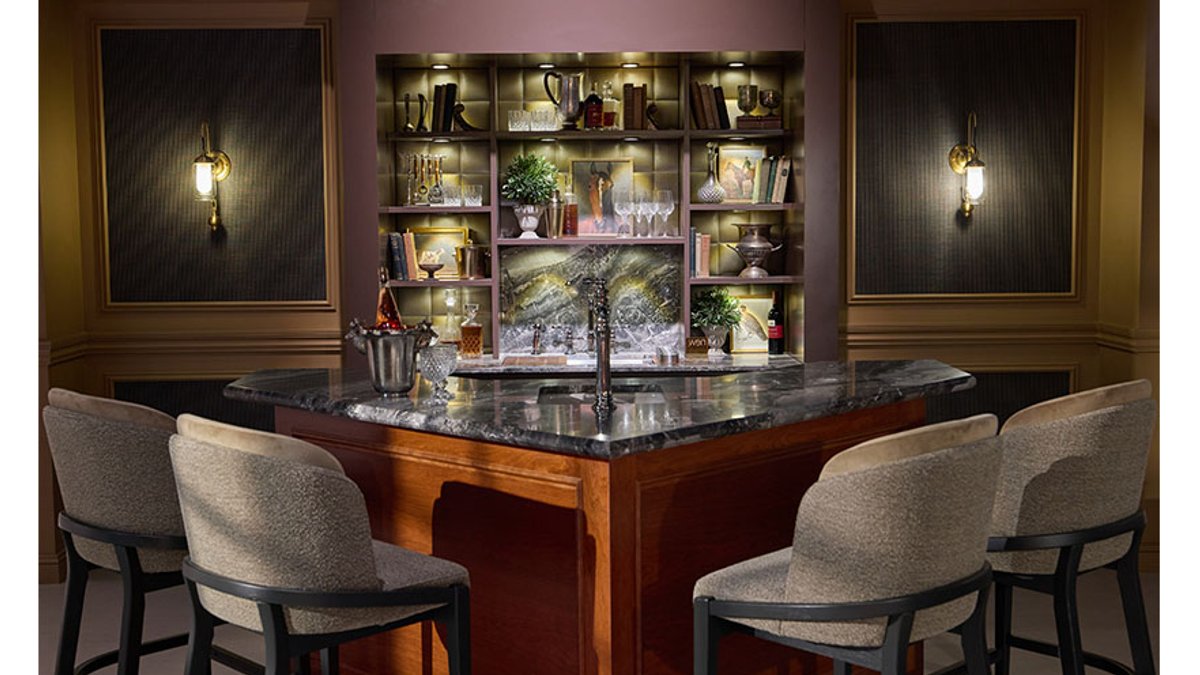
Dallas designer Javier Burkle introduced a new home bar concept at this year’s Kitchen & Bath Industry Show, part of Kohler’s House Party campaign. The design provides a practical approach to creating spaces that are both elegant and useful.
Storage as the foundation
Burkle begins every bar design with storage. Hidden compartments eliminate clutter, while open shelving or counter space allows owners to showcase glassware, bottles, and decor. This combination maintains a clean look without sacrificing personal style.
“A well-designed home bar should feel as thoughtful as it is effortless to use,” he explained. The blend of concealed and visible storage keeps the area tidy while letting the owner’s taste shine through.
Functional details that disappear
A compact prep sink, such as Kohler’s Synthos model, improves a bar’s functionality. Positioned at the back, it handles tasks like rinsing garnishes or filling ice buckets without interrupting the flow of hosting. Burkle describes it as a “workstation-style” feature that lets the host remain part of the conversation while keeping prep work discreet.
Surface materials also play a key role. Natural stone, particularly marble, develops a unique character over time. Burkle prefers double-slab marble from Ann Sacks, which gains depth rather than showing wear. While sealing is an option for those concerned about stains, he suggests letting the material age naturally. “A bar should feel like it has a history,” he noted.
Layouts that encourage lingering
The most effective bars do more than serve drinks—they create areas where people want to gather. Burkle incorporates multiple zones, including bar seating, lounge chairs, and small tables, to allow conversations to flow naturally. The design aims to make the bar feel like a seamless part of the home rather than just a drink station.
Related: Advantages of AC water for the face to keep it brilliant
Placement is essential. A bar works best when located near common gathering spots, such as adjacent to the kitchen, between living and dining areas, or opening onto an outdoor space. The layout should align with the home’s architecture and the owner’s entertaining habits. A straight run suits compact spaces, while an L-shape adds surface area and definition. A U-shape, if space permits, immerses guests in the experience, letting them sit and engage while the host prepares drinks.
Many home bars remain unused for long stretches. Burkle designs his to function throughout the day—whether for morning coffee, afternoon breaks, or casual hangouts even when no alcohol is served. When executed well, the bar becomes a daily habit rather than just a nighttime feature.
Lighting and color set the mood
Natural light should dominate during daylight hours, creating a bright and welcoming atmosphere. As evening falls, layered lighting takes over. Soft sconces, under-cabinet lighting, and dimmable fixtures provide warmth without harshness. The goal is to create a flattering glow for both the space and its occupants.
Neutral tones play a subtle but important role. They help reflect and soften light, making both daylight and artificial lighting feel more natural. A neutral palette also adds sophistication, allowing the atmosphere to take center stage.
Incorporating antiques or vintage pieces adds authenticity, making the space feel curated.
The most successful home bars, Burkle said, strike a balance between aesthetics and practicality. They serve as gathering spots while also reflecting the life lived within them. Milan Design Week will showcase similar concepts when it heads overseas in 2026, highlighting how design trends extend beyond individual homes.


