
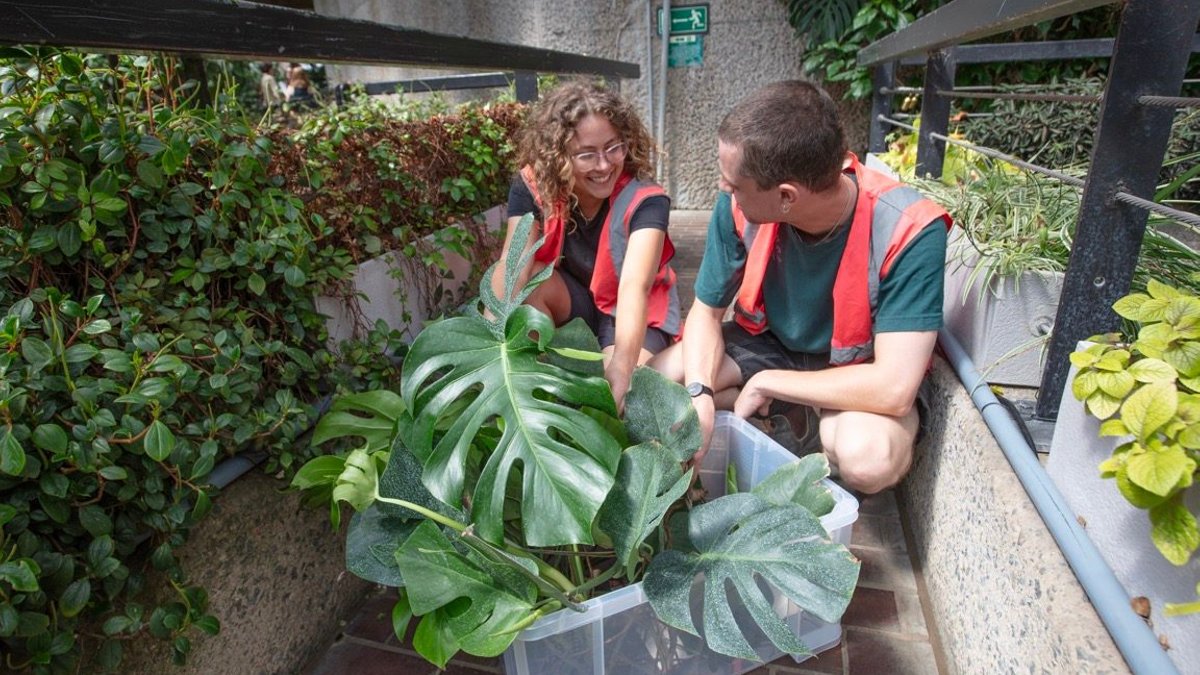
London’s Barbican Conservatory is giving away thousands of houseplants before a three-year restoration project closes the space until 2030.
The conservatory, which opened in 1984, is the city’s second-largest after the Princess of Wales glasshouse at Kew Gardens. It contains over 800 species, including banana trees, palms, and cacti. Many of these plants will soon be rehomed.
Free plants for Londoners
Visitors can adopt propagated cuttings of popular houseplants like monstera, ficus, and tradescantia. Wayward Plants, an organization that rehomes plants from major horticultural events such as the RHS Chelsea Flower Show, is managing the redistribution.
“Together with the Barbican’s horticultural team, we are propagating thousands of cuttings from this collection,” said Heather Ring, Wayward Plants’ co-founder and director. “It creates a living legacy for the Conservatory while allowing people across London to care for a small piece of it in their own homes.”
The first adoption event occurred on August 19, with free tickets selling out quickly. Additional opportunities are scheduled for September 13 and December 2, while November 29 is reserved for Young Barbican members. Updates will appear on the Barbican’s website and social media.
A major overhaul for the Brutalist landmark
The conservatory will close in 2027 for essential repairs to its aging infrastructure. Work will include re-waterproofing and installing sustainable systems. The redesign, overseen by Harris Bugg Studio in collaboration with Allies & Morrison, Asif Khan Studio, and environmental engineers Buro Happold, will improve growing conditions and accessibility.
Related: Experts warn common bird‑feeding mistakes, suggest proper methods
At present, only 30% of the space is fully accessible. The upgrades will add step-free access, wider paths, and a new lift. When it reopens in 2030, the conservatory will be free to visit daily, unlike its current limited schedule.
Marta Lowcewicz, the Barbican’s head gardener, has worked there for 16 years. “I’ve nurtured many of these plants from seedlings,” she said. “It’s meaningful to me and the team that so many will continue living in people’s homes.”
She also noted the difficulties of maintaining a space not originally built for plants. “That’s why I’m looking forward to the improvements—creating a better environment for the collection while making it more welcoming.”
The closure is part of the Barbican Renewal Programme, a broader effort to preserve the site. While the plants are being rehomed, staff are preparing for their return to a space better suited to their needs.
For now, Londoners have an opportunity to take home a piece of the conservatory’s history.
Lowcewicz’s work with the collection includes roses that thrive in controlled environments, though the conservatory’s diverse species require careful attention.


