
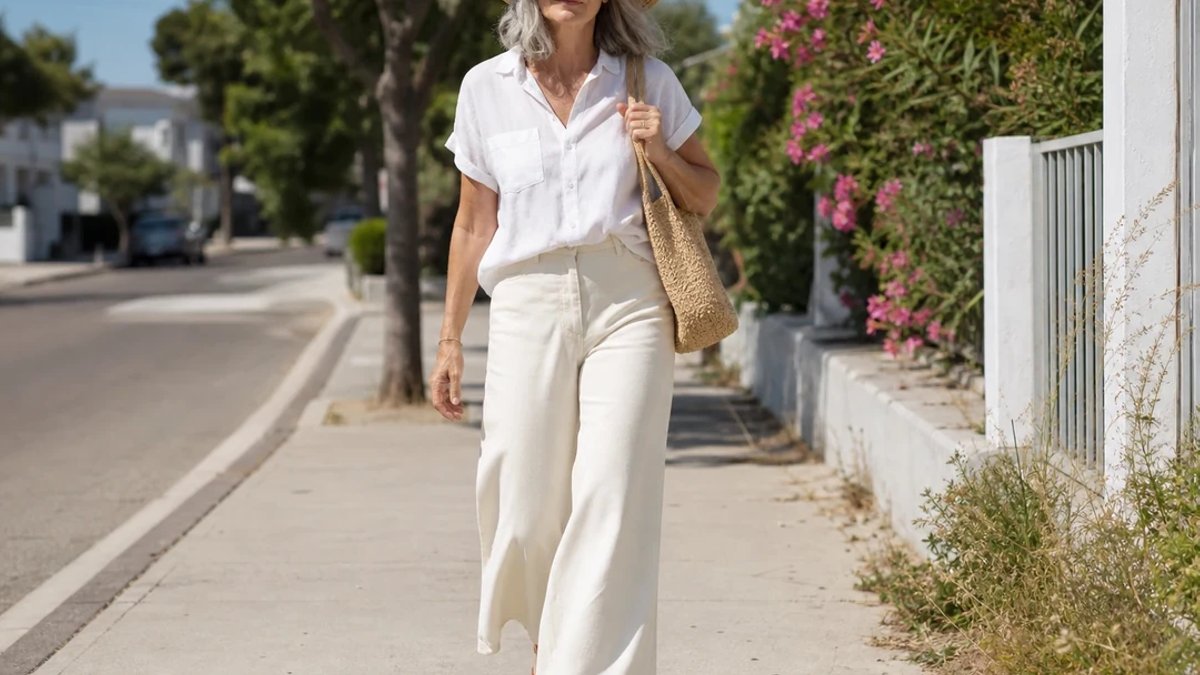
Denim is not the first fabric that comes to mind for a 100-degree day, but for women over 50, it remains the most practical and widely owned choice. The distinction between a comfortable afternoon and one that leaves skin clammy and irritated hinges on two key details found on the waistband tag: fabric weight and elastane content. Lightweight denim allows better airflow and sweat evaporation than heavier varieties, but the most significant factor is how effectively the fabric wicks moisture away from the skin.
A pale lyocell-cotton wide-leg jean weighing 8–10 ounces per square yard keeps legs cool by maintaining an air gap, while rigid 100% cotton straight-legs stay dry only in indoor settings. The Centers for Disease Control and Prevention’s heat guidance for adults 65 and older puts loose, lightweight, light-colored clothing on the same checklist as hydration and air conditioning, and notes that the aging body adjusts more slowly to sudden temperature swings. Clothing isn’t a style footnote in that document. It’s a control measure.
Why Fabric Weight Matters
Fabric weight classifications determine performance far more than cut names. Mills typically categorize anything under 12 ounces per square yard as lightweight, while 14 ounces and above qualifies as heavyweight. Heavier denim traps heat and moisture, making a 14-ounce “relaxed” jean hotter than a well-fitted 10-ounce straight leg—despite the relaxed cut appearing roomier. Elastane, though often overlooked, plays a key role by sealing the weave and keeping fabric close to the skin. While this may be comfortable in cooler weather, it becomes problematic in heat. Even a 2% elastane content eliminates the air gap needed for cooling, turning sweat and friction into chafing.
Lyocell-Cotton Blends Beat Heat
Lyocell—marketed under brands like Tencel—transforms performance when blended with cotton. A U.S. patent highlights how lyocell moves moisture away from the skin more effectively than cotton alone, preventing the damp patches that lead to prickly heat. In practice, a jean with 25–40% lyocell feels cool and slightly slippery against the leg, and it recovers from a sweaty hour in a way a rigid cotton pair does not. Why evaporation deserves this much attention: when sweat can’t escape, blocked sweat ducts follow.
Read Also: Newspaper wreath form has its limitations
That’s how dermatologists describe prickly heat, trapped perspiration under the skin, itchy bumps, usually right where fabric presses hardest. The advice that follows is lightweight and loose-fitting, which is precisely the opposite of a snug stretch jean. Geography changes the math. In the dry heat of Phoenix, Las Vegas, or Albuquerque, evaporation is fast and a moisture-moving fiber pays off enormously. In Houston, Atlanta, or New Orleans, humid air slows evaporation for every fiber ever woven; there, the cut and the air gap do more work than the fiber content does.
The wide column prevents skin contact, acting like a bellows to push out warm air and draw in cooler air with each step. The lyocell blend pulls sweat away from the skin, spreading it thinly enough to evaporate. Pale washes, such as ecru, bone, or faded indigo, absorb less radiant heat than dark denim does in open sun. The difference becomes noticeable within 10–15 minutes, and by 45–60 minutes, a rigid cotton pair still carries a damp band at the thigh and the blend has mostly dried.
Pitfalls of Wide-Leg Styles
This cut is not without drawbacks. A hem that puddles drags along hot pavement and wicks up grit, so ask for a half-inch break, no more. Viscose-heavy cheap blends stretch out and sag at the seat by mid-afternoon. And a very wide leg catches on bike pedals, garden tools, and car door frames; this is not the pair for weeding the beds.
Rigid straight-leg cotton jeans weighing 11–12.5 ounces work well for air-conditioned days or short walks, but they absorb sweat and stay damp once heated. Light indigo washes cut the radiant heat load substantially. Cropped straight-leg jeans with hems at or just above the ankle bone offer the fastest relief, creating a chimney effect that allows warm air to escape. This cut also accommodates heat-related swelling in the feet and ankles, a condition federal heat guidance flags for older adults.
Read Also: Hot Air Brush Boosts Volume for Fine Hair Over 60
Skinny stretch jeans with 2% or more elastane are the worst choice for heat. The fabric clings to the skin, eliminating airflow and creating conditions ideal for chafing and blocked sweat ducts.
Two fabric properties dominate hot-weather denim selection: a weight under 10 ounces and elastane content of 0–1%. Trying jeans on late in the day, when legs are slightly swollen, helps determine comfort. Hanging them inside out overnight instead of washing after every wear preserves the fabric’s structure. Frequent hot-season laundering degrades elastane and lyocell blends more quickly.
Timing Outings to Beat Heat
Federal heat guidance for older adults extends beyond clothing to the timing of outdoor activities. The CDC advises adults over 65 to avoid peak sun hours, between 10 a.m. and 4 p.m., when ultraviolet exposure and high temperatures accelerate sweat buildup. A wide-leg lyocell-cotton jean in a pale wash performs better during these hours, but the risk of heat stress increases sharply after 30 minutes of continuous exposure. Older adults are four times more likely to experience heat-related illness than younger populations, making early morning or late afternoon errands align with fabric performance. The pale wash reflects more sunlight, and the lyocell blend ensures sweat evaporates before becoming trapped.
Where to Find and How to Maintain Hot-Weather Jeans
Lightweight wide-leg styles are available at Madewell, Talbots, Chico’s, and Lands’ End, ranging from $80 to $150, with better-quality blends. These retailers stock the same cut, allowing shoppers to compare fabric feel and price without traveling far.


