
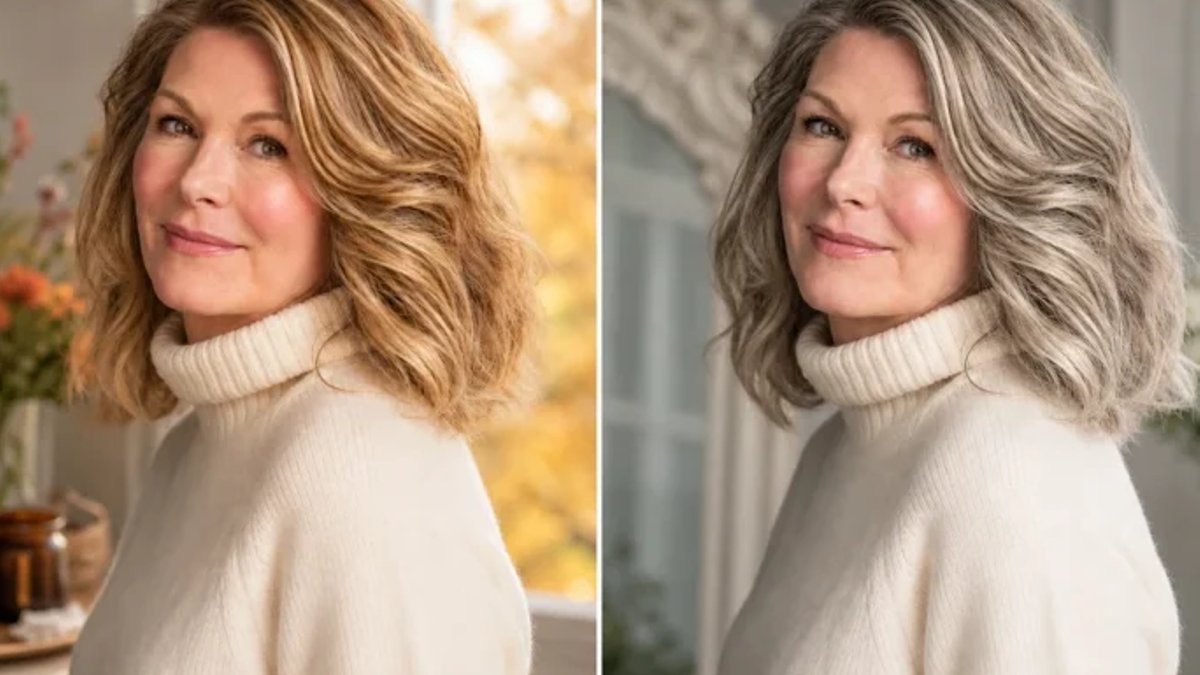
Choosing the right blonde shade after 50 often feels like a gamble, but the choice comes down to pigment and how it interacts with skin tone. Warm gold tones tend to flatter most women over 50, while blue pigments in ash blonde can make mature skin appear gray and tired. A simple jewelry test in natural light can determine if warm or cool undertones are dominant, guiding the decision between a rich honey shade or a cool ashy tone.
The problem with ash tones
Ash blonde contains blue pigment that cancels out yellow tones to create a matte, silvery finish. That coolness is attractive on certain skin types, but it can optically drain warmth from the face, especially on deeper or tanned skin. The effect often highlights fine lines and makes the complexion look sallow. Additionally, starting from a warm base usually requires a thorough lift in several passes, otherwise the ash tone turns brassy within weeks.
Ash blonde works best on fair, untanned skin that already runs cool. On fair skin with pronounced redness or rosacea, the cool tone can balance things out optically. However, for most people with a warmer complexion, the effect is flat rather than flattering. On a distinctly warm undertone, ash blonde lifts the face less than true honey does, creating a washed-out appearance rather than one that feels refreshed.
The problem with ash is that the labor involved is high. Achieving a flat, opaque cool tone often requires multiple lifting passes, and the color traces fine lines more sharply than soft warm reflects do. While the cool tone itself may fade slowly, the underlying brassiness creeps in faster, requiring more frequent maintenance to keep the color looking fresh.
The benefits of honey tones
Honey blonde functions like a soft-focus filter for the face. Gold and caramel pigments bounce warm light back into the skin, evening out a complexion that has lost its natural rosiness. This creates a softening effect that rounds off hard contours and makes the skin look more radiant. Wella Professionals has leaned into a rich honey blonde for the fall season, favoring the “old money” register over cool ash and platinum shades.
This spectrum runs from light, almost beige nuances to deep amber. Golden tones work particularly well with hazel, green, or amber eyes. The low-commitment entry point is a demi-permanent color glaze, which requires no lift and is completed in under 60 minutes. If the color does not suit the client, it washes out completely. For those with visible gray hair, honey ribbons woven through the hair allow the regrowth line to stay soft rather than creating a harsh, uniform contrast.
While honey blonde offers a radiant lift, it has two main weaknesses. On a very cool winter type, the complexion can look flat rather than glowing. Furthermore, the gold pigment fades faster than ash due to exposure to UV light, heat, and frequent washing. To extend the life of the color, experts recommend using a sulfate-free shampoo with gold pigment and washing with lukewarm water.
Gold tones visibly lift a complexion that turns paler with age, but they can be tricky to maintain. On very cool complexions, the effect may be too subtle, while on warm undertones, the color tends to fade quickly. The key is finding a shade that matches the skin’s natural undertones, which is why consulting with a colorist is essential rather than making a decision based on a swatch rack.
The undertone test
The gold-versus-silver test needs no appointment. In daylight, hold gold jewelry and then silver jewelry up to your face. If gold makes your skin glow, your undertone is warm and honey blonde is your shade. If silver looks fresher, you are cool, and ash or platinum tones sit better. The seasonal color types narrow it further. Light spring, rosy summer and warm autumn all benefit from honey. Only the very cool winter type falls outside this group.
Which shade suits whom
| Shade | Best for | Salon effort | Fade speed |
|---|---|---|---|
| Honey blonde | Warm and neutral undertones, hazel/green/amber eyes | Low with a glaze, under 60 minutes | Fast — gold washes out |
| Beige / vanilla blonde | Neutral undertones | Moderate, pigment mix needs a pro | Moderate |
| Ash / platinum blonde | Cool undertones, fair skin with redness | High, often several lifting passes | Slow, but brassiness creeps in |
Two questions everyone asks the colorist. Does honey blonde work with a lot of gray? Yes, best as woven pieces rather than opaque all-over color. Honey ribbons through gray let the regrowth grow out softly. They look more natural than a uniform tone. How often does honey blonde need refreshing? A demi-permanent glaze also fades gradually by design.
Sulfate-free care with gold pigment from any drugstore aisle, plus lukewarm water, stretches the interval noticeably. So your fall appointment is more or less decided. Jewelry test first, then the glaze rather than permanent color if you are still unsure. Rinse the last 30 seconds cold. The cuticle lies flatter and gold reflects hold their shine a week or two longer.


