
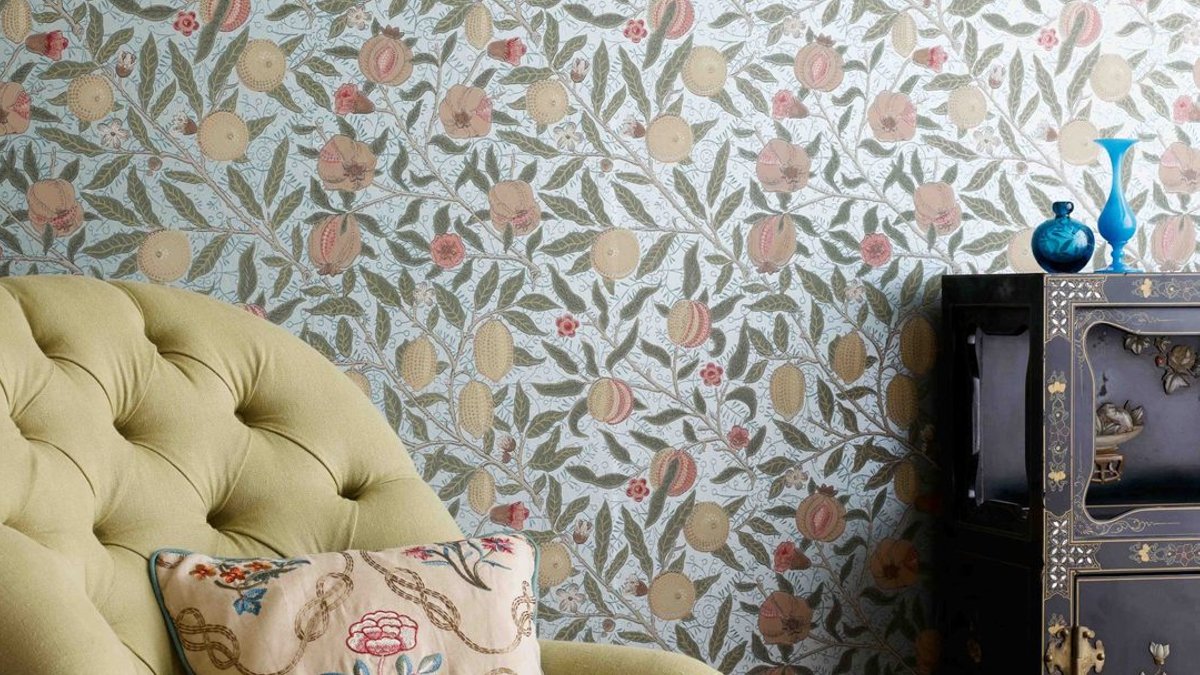
William Morris, a renowned designer, left a lasting impact on the world of art and design. He was one of the major creative forces of Victorian Britain and the founder of the Arts and Crafts movement. Today, his designs are considered a national treasure, with fabrics and wallpapers created by him and his company, Morris & Co, still being regarded as familiar and comfortable.
Morris’s style has stood the test of time, and his ideals of simplicity and craftsmanship have influenced 20th-century design. According to Anna Mason, curator at the William Morris Gallery, “Morris was radical and revolutionary in everything he did,” and he remains highly influential.
Early Life and Influences
Morris was born in Walthamstow, London, in 1834, to a wealthy stockbroker. He attended Oxford University to read classics and planned to enter the church. However, at Oxford, he met Edward Burne-Jones, a pre-Raphaelite artist, and his lifelong friend and mentor. This meeting sparked Morris’s interest in art and literature, which was further influenced by Ruskin, Medievalism, and the Romantic movement.
Morris and Burne-Jones established The Brotherhood, an intellectual society that aimed to fight against the conventions of the time. The society played a significant role in shaping Morris’s artistic and design career.
Related: Naming a sweet pea stumps top chef
Design Career
Morris began his design career in 1856, when he started an apprenticeship with the Gothic-Revival architect George Edmund Street. He trained under Philip Webb, who became a friend and later designed Red House in Bexleyheath for Morris. The house was decorated in medieval style, and upon its completion in 1861, Morris turned his hobby into a commercial venture and set up Morris, Marshall, Faulkner & Company.
The company, later known as Morris & Co, sold original domestic furnishings, including wallpapers, upholstery fabrics, stained glass, and tiles. Morris also founded the Art Workers’ Guild in 1884, which aimed to break down barriers between artists, designers, and makers.
Morris’s design style was characterized by the use of natural materials and traditional techniques. He block-printed his wallpaper and textile designs by hand and experimented with natural dyeing methods. In 1881, the company moved to a printworks at Merton Abbey, London, where Morris developed complex indigo discharge printing.
Inspirations and Legacy
Morris was inspired by various sources, including Islamic art, which he admired for its symmetry and ordered patterns. He often visited the Victoria and Albert Museum to view the Ardabil Carpet, made in Iran in the 16th century. Morris incorporated elements of Islamic design into his work, including the use of tulips and other plant forms.
Related: Rare pink daffodil needs gardeners help
One of Morris’s most famous designs is the Strawberry Thief pattern, which was created in 1883. This iconic depiction of English nature in the Arts and Crafts style has become a timeless classic. Morris’s designs continue to influence artists and designers today, and his legacy as a pioneering figure in the Arts and Crafts movement remains unparalleled.
A writer, poet, translator, publisher, environmentalist, and socialist, Morris was appalled by the over-elaborate, mass-produced goods that were flooding the Victorian market, and sought to reintroduce traditional techniques that had been lost in the Industrial Revolution.
They remain highly regarded.


