
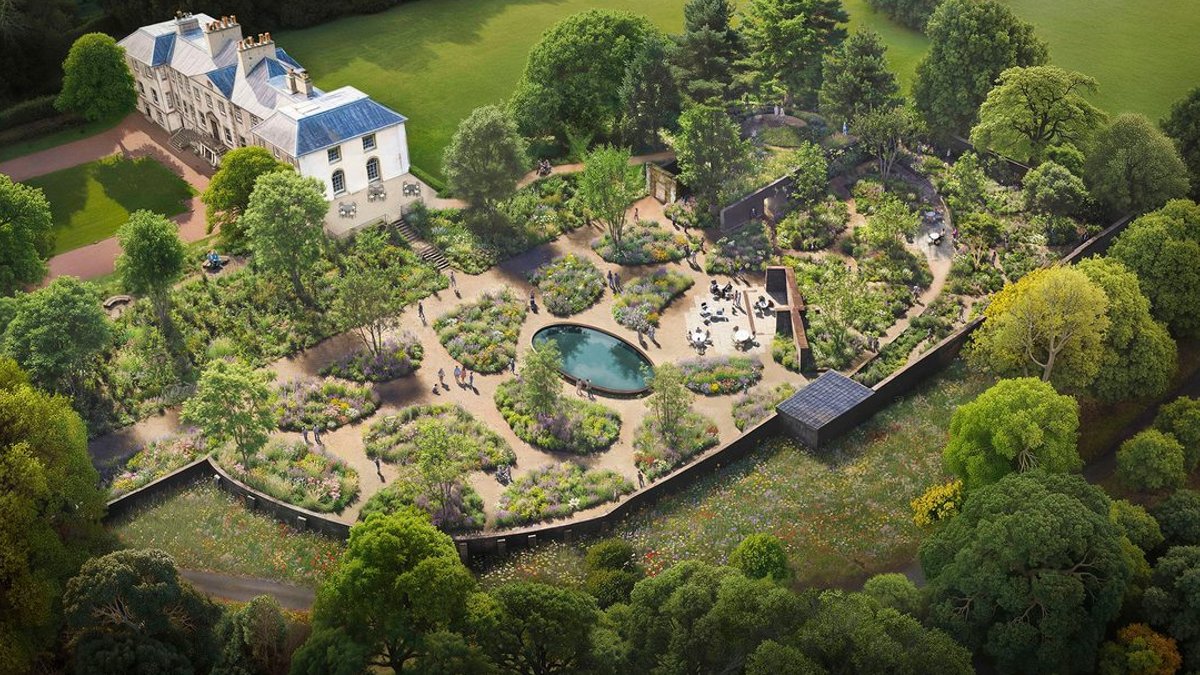
The National Trust for Scotland’s upcoming centenary will be marked by a three‑acre garden at Newhailes House & Gardens, a historic estate near Edinburgh, where designers Charlotte Harris and Hugo Bugg of Harris Bugg Studio are drawing on two‑century‑old plans.
Historic designs guide a contemporary setting
In the late 1700s, Miss Christian Dalrymple inherited Newhailes and hired horticulturist John Hay to design a garden that was never built. Hay’s drawings, preserved in the National Library of Scotland, feature paisley motifs that suggest teardrops and unfurling leaves. Harris Bugg Studio used those sketches as a template, adapting the motifs to current planting schemes.
Before drafting the new layout, the designers spent weeks walking the walled enclosure, noting the view from the Palladian villa toward Arthur’s Seat and the shoreline town of Musselburgh. Their observations helped shape a garden that respects the estate’s historic sightlines while adding fresh visual interest.
Materials and features reflect local heritage
One of the garden’s signature elements will be a series of planted islands shaped like shells, echoing Musselburgh’s name origin. The islands are intended to be visible from the house above and to provide immersive experiences at ground level. Curving benches made from reclaimed stone and crushed bricks will serve as seating and as part of the planting substrate.
“It is about designing with what exists, reducing waste and carbon impact, and allowing the story of the place to be told through its materials,” Hugo Bugg said. The plan also includes a pavilion and generous seating areas, inviting schools, local groups, and individual visitors to gather.
The garden will host trial beds for climate‑adaptive planting, a nod to the Enlightenment values of innovation that guided the estate’s original owners. Rich, resilient flora will support pollinators, while old bee‑boles in the garden walls will be repurposed as hibernation spaces for wildlife.
In comparison with other heritage projects that merely restore past layouts, this effort blends preservation with forward‑looking ecology, aiming to keep the garden functional for future generations.
The finished garden is expected to serve as a living library of ideas, where plants, materials, and craft convey knowledge without a single page.


