
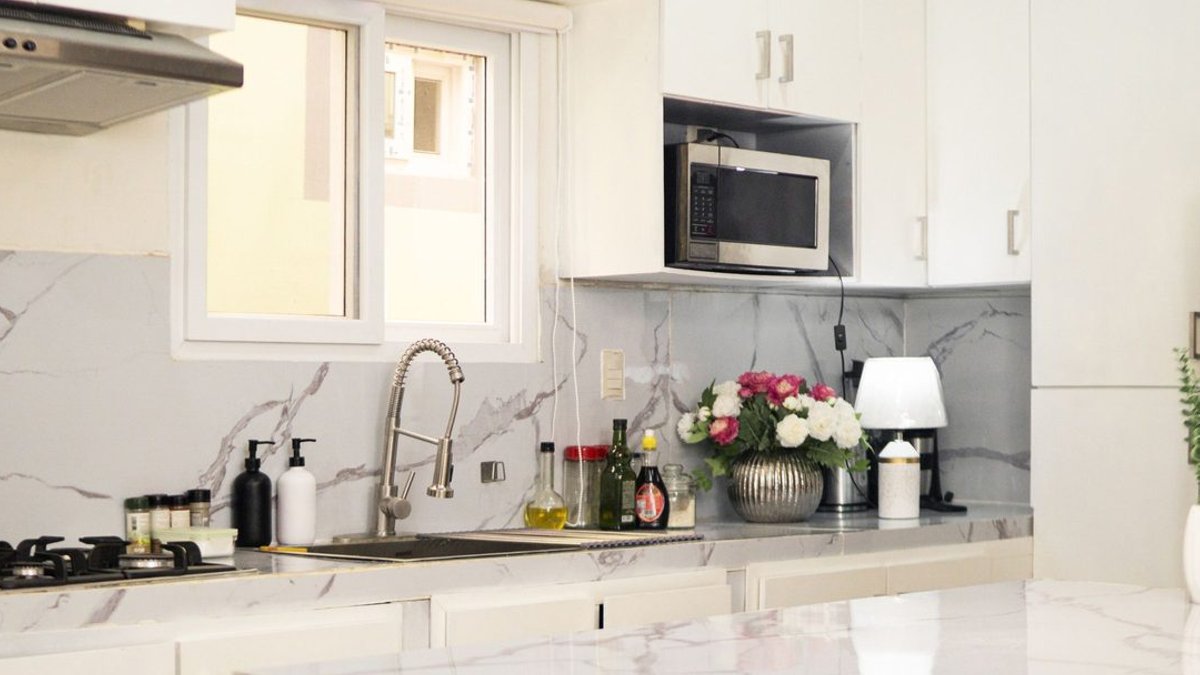
The choice of worktop for a kitchen can be overwhelming, with numerous materials available, each with its own set of benefits and drawbacks. From affordable laminate to high-end stone, the options are vast, and the decision ultimately depends on factors such as budget, kitchen habits, and personal aesthetic.
Emma-Louise, product manager at Bushboard, states that laminate is a popular choice due to its affordability, with prices starting from as little as £250 for a standard three-metre run. Laminate can be up to 85% cheaper than some natural surfaces, such as quartz and stone, making it an attractive option for those on a budget.
Modern, high-quality laminates are quick and easy to install, boast a durable top layer that’s both waterproof and scratch-resistant, and come in a huge selection of designs. However, they do require protection from heat damage, and regular cleaning is necessary to maintain their appearance.
Alternative Options
Solid surface worktops, also known as composites, are another option, made from a blend of synthetic resins, minerals, and pigments. They are generally more affordable than natural stone and offer many practical benefits, including durability, resistance to scratches and stains, and low maintenance.
Alex Peters, cost guide expert at Checkatrade, notes that composite worktops can be expensive to install, with costs ranging from £1,200 to £2,000 for a five-metre length, including installation. However, they can be moulded to any shape, and features such as wireless charging points can be integrated into the design.
Granite worktops are a durable and hygienic option, resistant to heat and hardwearing, but they do require regular cleaning and sealing. They are also very heavy, making them a costly option to install, with prices starting from £435 per square metre, including supply and installation.
Other options include sustainably sourced wooden worktops, which can last for years with proper care, and marble, which offers a luxurious and timeless appearance but is less durable than granite or quartz.
Recent reports have highlighted the health risks associated with quartz worktops, particularly for workers involved in their manufacture. Professor Kevin Bampton, chief executive officer of The British Occupational Hygiene Society, notes that the silica particles contained in dust created during the cutting, breaking, and grinding of quartz surfaces can pose serious health risks, including accelerated silicosis.
Read Also: Dan Pearson to close garden design studio
As a result, some distributors are looking at lower-silica products, and consumers are advised to choose reputable suppliers, such as approved members of the Worktop Fabricators Federation, to ensure that their worktop has been manufactured without putting workers’ lives at risk.
The Health and Safety Executive is also putting a focus on businesses that are causing risk, and a kite-mark-type scheme is set to be launched in 2026 to provide consumers with assurance that their worktop has been manufactured safely.
For those looking for alternative options, ceramic worktops, made from natural materials such as clay and pressed minerals, are versatile and offered in an array of colours to suit any kitchen scheme. They are resistant to heat and water damage, easy to clean, and incredibly durable, but are one of the more expensive options, with prices starting from £400 per square metre.
A custom-made high pressure porcelain worktop from IKEA, for example, costs around £500 per square metre.
Ceramic worktops offer a unique blend of style and practicality. Made from natural materials such as clay and pressed minerals, these worktops are treated at high temperatures to create a durable and versatile surface. They are resistant to heat and water damage, easy to clean, and incredibly durable against daily use, making them a great choice for busy family kitchens.
Choosing the Right Worktop
When choosing a worktop, it is essential to consider factors such as budget, kitchen habits, and personal aesthetic. For those with a large kitchen, a lower-cost material may be necessary to stay within budget. On the other hand, those with a small kitchen may be able to splurge on a more premium option. Alex Peters advises prioritizing durable materials that will last, such as low-silica quartz or granite, for busy family kitchens.
Additionally, consideration should be given to the amount of time one is prepared to spend looking after their kitchen worktop. Some materials, such as wood, may require regular oiling or sealing to keep them looking their best. Others, such as laminate or ceramic, may require very little maintenance. By taking the time to consider these factors, homeowners can choose a worktop that meets their needs and provides years of service.
The cost of worktops can vary significantly, depending on the material and brand chosen. For example, a solid wood worktop can cost from around £120 for a two-metre length. By doing research and comparing prices, homeowners can find a worktop that fits their budget and meets their needs.


